Bad TV reception usually comes from an ageing antenna, a corroded cable or connector, a failing amplifier or interference, and most of these can be found and fixed. At Murphy's Electrical & Data, we help Nowra and Shoalhaven homeowners whose shows break up mid-sentence, freeze or drop to "No Signal". This guide covers what you can safely check at home, what typically goes wrong in our area and when to call a licensed electrician.
Key Takeaways
- Pixelation, freezing, sound dropouts and "No Signal" messages are the most common signs of bad TV reception.
- Indoor checks such as TV settings, loose cables, the wall plate and a channel rescan are safe for homeowners. Anything on the roof or mast should be left to a professional.
- The usual local causes are ageing antennas, corroded cables and connectors, salt air near the coast, storm damage and interference from household electronics.
- Murphy's Electrical & Data has over 25 years of experience and NSW Electrical Contractor's Licence 275815C. We test your reception properly, find the real fault and issue a Certificate of Compliance on every job.
- Call us on 0423 529 267 or read about our antenna installation and repairs in Nowra.
What Does Bad TV Reception Look Like?
Digital TV either looks clear or obviously broken, with nothing in between. Unlike the snowy picture of old analogue TV, a small drop in signal quality can tip a digital picture from perfect to unwatchable. Look out for:
- A blocky, pixelated picture on one or more free-to-air channels
- The picture freezing for a second or two, then jumping ahead
- A "No Signal" or "Weak Signal" message on screen
- Sound dropping out or distorting while the picture looks fine
Pay attention to whether the problem affects one TV, one room or the whole house. That pattern tells us whether the fault is in the TV, the wall plate, the cabling, a splitter, an amplifier or the antenna itself. In the Shoalhaven, problems often show up first on HD channels or in wild coastal weather, when a marginal signal gets pushed over the edge.
Quick, Safe Checks You Can Do Before Calling Anyone
Stay on the ground. Everything below can be done indoors and is low risk. Leave ladders, roof access and anything on the mast to a professional.
TV and equipment checks
- Make sure the TV is on the right input, such as "TV" or "DTV", not an HDMI source.
- Check the antenna lead is firmly plugged into both the TV and the wall plate, and that the centre pin isn't bent.
- If only one room has problems, try that TV on a different wall plate. If the problem follows the TV, the set may need attention. If it stays with the wall plate, the cabling or splitter on that line is the likely culprit.
Rescan your channels
- Press "Menu" or "Settings" on your remote.
- Go to "Channels", "Broadcast" or "Tuning".
- Run an "Auto Tune" or "Channel Scan". This is worth doing after any change to local broadcast frequencies.
Visual cable checks
- Look for crushed, kinked or damaged sections of cable behind the TV.
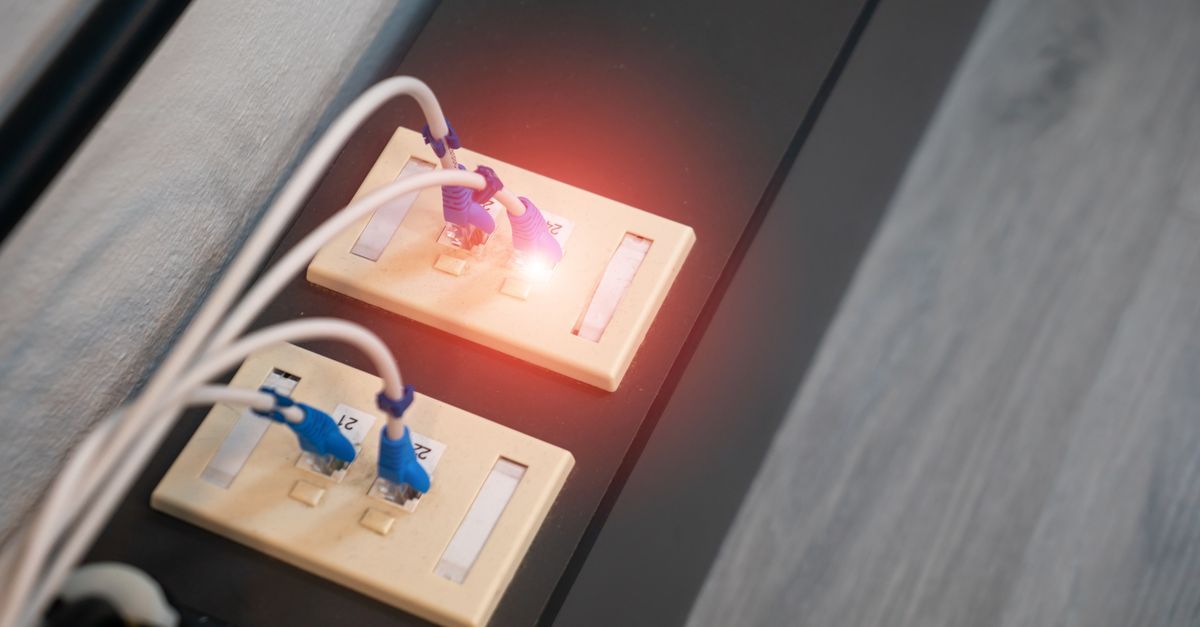
- Check the wall plate for cracks, movement or green or white corrosion around the connector.
- If you use joiners, fly leads or cheap indoor splitters, take them out temporarily to see if reception improves.
Interference checks
- Some household electronics put out electrical noise that disrupts digital signals. Switch off old power supplies, dimmers, cheap LED strip lights and chargers near the TV one at a time and see if the problem disappears.
If none of these fixes it, the fault is probably in the roof-space cabling, an external splitter, an amplifier or the antenna. That's the point to call a professional.
Common Causes of Bad TV Reception in Nowra and the Shoalhaven
Coastal weather, salt air and hilly terrain make the Shoalhaven tough on antennas and cabling. These are the causes we see most around Nowra, Bomaderry, Greenwell Point and Jervis Bay.
An ageing or damaged antenna. Many homes still run antennas put up before digital TV fully took over in Australia. Over time, elements come loose, mounts rust and connection boxes fill with water. Strong winds and storms can also knock an antenna out of alignment, and a directional antenna needs to point at the right transmitter to work well.
Cables and connectors. Sun, heat and weather crack cable sheathing on roofs and walls. Corroded connectors, poorly fitted terminations and cheap fly leads are some of the most common causes of reception that comes and goes. One bad joint between the antenna and the first splitter can affect every TV in the house. Good quality RG6 cable is the standard for digital TV installations.
Splitters, amplifiers and old hardware. Splitters and masthead amplifiers can fail through age, moisture or even insects nesting inside. Every extra split weakens the signal, and a failing or badly matched amplifier can make reception worse by adding noise. Homes near mobile phone towers can also have their TV equipment overloaded by mobile signals.
Interference and obstructions. Faulty power supplies, old dimmers, pumps and motors can push electrical noise into the TV signal. Signals bouncing off buildings or metal roofs can confuse the TV tuner, and trees, extensions and neighbouring buildings can block the path to the transmitter. In the hillier parts of the Shoalhaven, small changes in antenna height or direction make a big difference.
Weather. Heavy rain and strong wind can make a weak signal worse, especially in exposed spots like Culburra Beach. More often, though, bad weather just exposes an existing weakness such as a corroded joint or a loose mast.
Why Safe Testing and Professional Repairs Matter
Professional testing finds the actual fault, so you don't spend money on parts you don't need. Working on antennas and masts is also height work, and it shouldn't be done by homeowners.
What proper testing involves
- Using a TV signal meter to measure signal strength and quality at the antenna, at each splitter and at each wall plate, so we can see exactly where the signal is being lost.
- Checking each run of cable and every connector rather than guessing or simply adding a booster. An amplifier helps in weak signal areas, but only when it's the right one, fitted in the right place.
- Confirming the antenna suits the digital TV frequencies used in your area and is aimed correctly.
The risks of DIY
- Falls from ladders or roofs while trying to realign an antenna
- Unsafe situations from mixing TV cabling with mains wiring in the ceiling
- Money spent on a new antenna or booster when the real fault is a hidden cable joint
How a visit from Murphy's Electrical & Data works
- We ask when the problem started and which rooms and channels are affected.
- We test at the wall plates first, then at the splitter, then at the antenna if needed, so every part of the system is checked rather than assumed.
- We explain what has failed, such as a water-logged amplifier, perished cable or a misaligned antenna, and what it will take to fix it.
Murphy's Electrical & Data is family owned and operated, has over 25 years of electrical and data experience across Nowra and the Shoalhaven, and issues a Certificate of Compliance on every job.
When to Call Murphy's Electrical & Data (and What We Can Help With)
Call a professional if reception is still unreliable after the indoor checks, or if fixing it would involve ladders, the roof or replacing cable. Typical signs you need a visit:
- Ongoing pixelation or "No Signal" on several TVs
- Reception cutting out whenever it's windy or wet
- A rusted mast, a loose antenna or a picture that doesn't improve after a rescan
- Reception that got worse after an extension or renovation
What we can help with
- Testing, fault-finding and repairs to antennas, splitters and amplifiers
- Replacing ageing or water-damaged cable, wall plates and connectors
- Advice on the right antenna and setup for your suburb and type of home
If you're in Nowra or the Shoalhaven and your TV reception isn't what it should be, call Murphy's Electrical & Data on 0423 529 267 or visit our antenna installation in Nowra page. We'll find the problem, explain it clearly and fix it properly.
FAQs about Bad TV Reception in Nowra
Can bad TV reception damage my television?
No. Pixelation and "No Signal" messages are frustrating, but they don't normally damage a modern TV. The bigger risk is DIY fixes such as unsafe rewiring or incorrectly connected power supplies for amplifiers. If your TV keeps switching itself off or showing error codes, have both the set and the signal checked.
Why does my TV reception get worse at night?
Night-time problems often come from extra interference. More lights and electronics switch on across the neighbourhood in the evening, which can tip an already weak signal over the edge. Changes in the atmosphere after sunset can also affect signals in fringe areas. Testing usually shows whether the signal path needs strengthening.
Is an indoor TV antenna good enough in the Shoalhaven?
Usually not for reliable reception. Indoor antennas are easy to set up, but they're less capable than outdoor antennas. Metal roofs, brick walls, trees and hills all reduce what a small indoor unit can pick up. If an indoor antenna only gets a few channels or keeps pixelating, an outdoor antenna is usually the better fix.
Do I need a new TV antenna every time there is a reception issue?
No. Many reception problems are caused by cabling, connectors, splitters or amplifiers rather than the antenna itself. We test each part of the system before recommending anything, so you only replace what has actually failed. In some older homes with pre-digital antennas, though, a new antenna is the most reliable long-term fix.
How often should a TV antenna and cabling be checked in coastal areas?
There's no fixed timetable, but in salty coastal suburbs around Jervis Bay and the Shoalhaven it's sensible to have the mounts, masthead equipment and exposed cable looked at every few years. Rust stains, loose brackets or cracked cable near the roofline are signs to book a check sooner. Murphy's Electrical & Data can assess your antenna and signal without you going anywhere near the roof, so give us a call on 0423 529 267.