A safety switch that keeps tripping is doing its job. It has detected electricity leaking from a circuit and cut the power to protect the people in your home. At Murphy's Electrical & Data, we get this call from Nowra and Shoalhaven homeowners all the time. This guide explains why your safety switch keeps tripping, what you can safely check yourself, and when it's time to bring in a licensed electrician.
Key Takeaways
- A safety switch trips when it detects current leaking to earth. The usual causes are a faulty appliance, moisture getting into a fitting, or damaged wiring.
- You can safely unplug appliances on the affected circuit and try one careful reset. Any repair to wiring, switchboards or fixed equipment must be done by a licensed electrician.
- Repeated trips, a burning smell, scorch marks or a switch that won't reset at all need a licensed electrician straight away.
- Murphy's Electrical & Data is a family owned and operated electrician in Nowra with over 25 years of experience and NSW Electrical Contractor's Licence 275815C. We find and fix the cause of tripping safety switches and issue a Certificate of Compliance on every job.
- Call us on 0423 529 267 or read more about our safety switches electrician service in Nowra.
What a Safety Switch Does (And How It Differs From a Circuit Breaker)
A safety switch protects people from electric shock, while a circuit breaker protects your wiring from overload. The safety switch, also called a residual current device or RCD, constantly compares the current flowing out on the active conductor with the current coming back on the neutral. If some of it is leaking away to earth, even a very small amount, the switch cuts the power in a fraction of a second. That's fast enough to stop a dangerous shock.
A circuit breaker works differently. It trips when a circuit draws more current than its rating allows, such as when too many heaters are running on one circuit or a cable shorts out.
On most NSW switchboards you can tell them apart at a glance:
- A safety switch is usually wider and has a small test button marked "T" or "Test".
- A circuit breaker shows an amp rating (such as 10A, 16A or 20A) and has a simple lever with no test button.
In many homes around Nowra, Bomaderry and Worrigee, one safety switch protects several circuits, such as lights, power points and the oven. When it trips, everything it covers goes off together, which is why a single faulty kettle can black out half the house.
First Checks When Your Safety Switch Keeps Tripping
The first step is to work out what was happening when the switch tripped and which parts of the house lost power. Don't keep forcing the switch back on. Each reset without finding the cause leaves the fault in place and keeps the risk of shock or fire.
- Note what was running at the time. Were you boiling the kettle, running the washing machine or plugging something in outside?
- Walk through the house and test a light and a power point in each room to see which circuits are off.
- At the switchboard, look for a safety switch in the off position or sitting halfway between on and off.
- If you see scorch marks or melted plastic, or smell burning at the switchboard or a power point, leave the switch off and call a licensed electrician.
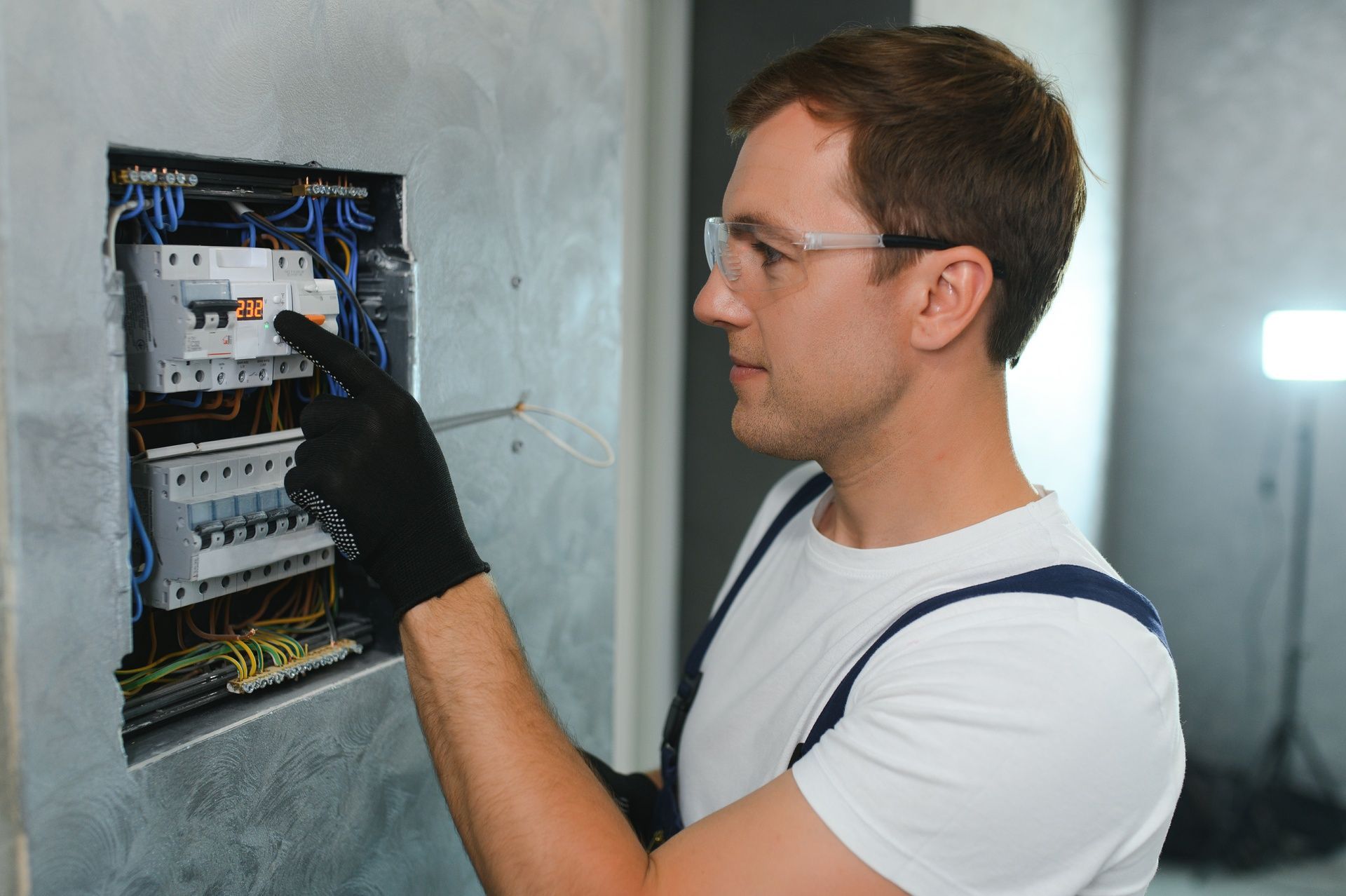
It helps to take a quick photo of the switchboard before you call. When you phone Murphy's Electrical & Data, a photo lets us understand what's happening and come prepared.
Step-by-Step: How to Safely Isolate a Faulty Appliance
A faulty appliance is the most common reason a safety switch keeps tripping, and you can safely check for one without doing any electrical work. Here's the process we recommend to Shoalhaven homeowners:
- Make sure the tripped safety switch is fully off.
- Work out which rooms or circuits have lost power, such as the kitchen, laundry or outdoor power points.
- Unplug every appliance on those circuits, including fridges, kettles, toasters, microwaves, washing machines, dishwashers, pool pumps and outdoor equipment. Switching off at the wall isn't enough; pull the plug out.
- With everything unplugged, try one careful reset by pushing the safety switch firmly to on.
- If it holds, plug appliances back in one at a time, waiting about 30 seconds between each.
- If the switch trips when a particular appliance goes back in, unplug it, label it and stop using it. Have it repaired or replaced by a qualified repairer, and don't open it up yourself.
If the safety switch still trips with everything unplugged, the fault isn't in a plug-in appliance. It's in the fixed wiring, a hard-wired appliance or the switch itself, and that's a job for a licensed electrician.
Common Causes of a Safety Switch That Keeps Tripping
Most repeated tripping comes down to earth leakage from one of a handful of sources. These are the causes we find most often in homes across Nowra and the Shoalhaven:
- Faulty appliances. Heating elements in kettles, ovens and hot water systems wear out over time. Once the element sheath cracks or corrodes, current leaks to earth and the safety switch trips.
- Moisture getting in. After heavy rain, water can find its way into outdoor power points, garden lighting connections or bathroom exhaust fans and create a path for leakage.
- Ageing cable insulation. In older homes, the insulation on cables can break down with age, heat and UV exposure, letting current escape.
- Lots of small leaks adding up. Chargers, LED drivers and other electronics each leak a tiny amount by design. With enough of them on one circuit, the total can tip the safety switch over its limit. This is often called nuisance tripping.
- Damaged cables. Rats chewing wiring in the roof or wall cavity, or cables pinched during renovations, create weak points in the insulation.
- A worn-out safety switch. The device itself can age and become overly sensitive or stop holding.
An overloaded circuit is another cause of tripping, though that usually trips a circuit breaker rather than the safety switch. Pinpointing the real cause takes test equipment such as an insulation resistance tester and an RCD tester, which is why the final diagnosis should always come from a licensed electrician.
How to Tell if You Have a Faulty Safety Switch
A safety switch can wear out, and when it does it can no longer be relied on to protect your family. Most tripping is caused by something on the circuit, but these signs point to the switch itself:
- It trips for no obvious reason, even with every appliance unplugged.
- It won't reset at all, even with nothing connected.
- It feels warm to the touch.
- There are cracks, discolouration or scorch marks on the device.
- Pressing the test button doesn't trip it, or it trips slowly.
Only a licensed electrician with the right test gear can confirm whether the switch has failed or whether a hidden wiring fault is to blame. Never tape a safety switch in the on position, bypass it or try to replace it yourself. That's dangerous, and in NSW it's illegal electrical work.
Moisture, Weather and Outdoor Circuits
If your safety switch trips every time it rains, moisture in an outdoor fitting is the most likely cause. Coastal homes in the Shoalhaven cop plenty of weather, and salt air speeds up corrosion in outdoor fittings, from Culburra Beach and Greenwell Point to Huskisson and Vincentia.
The usual trouble spots are:
- Outdoor power points without a proper weatherproof cover
- Garden lighting junction boxes
- Pool and spa pump connections
- Sheds and external outlets used for caravans or tools
You can safely look from the outside for cracked covers, water sitting inside an outlet, green corrosion on terminals or insects nesting inside fittings. If the switch trips in wet weather or when outdoor gear is used, leave that circuit off and have it inspected. Long-term fixes include properly rated weatherproof fittings, better sealing and separate safety switch protection for outdoor circuits, and Murphy's Electrical & Data can design and install these for your home.
When the Problem Is in the Wiring or Switchboard
If your safety switch keeps tripping with nothing plugged in, the fault is almost always in the fixed wiring, a hard-wired appliance such as the oven or hot water system, or the switchboard. Common wiring faults include:
- Insulation breaking down in older cables
- Loose or corroded connections in junction boxes
- Cables damaged by pests or during renovation work
- Too many power points or high-draw appliances on one circuit
Which device trips (the safety switch, a circuit breaker or both) tells a licensed electrician where to start looking. Proper fault finding involves insulation resistance testing, earth leakage measurements and checking how each circuit is wired through the switchboard. Please don't remove switchboard covers or go near live wiring yourself.
Safe DIY Checks vs Work for Licensed Electricians
In NSW there's a clear line between simple checks a homeowner can do and electrical work that must be done by a licensed electrician.
What you can safely do:
- Unplug appliances from power points
- Reset a tripped switch once or twice at most
- Press the test button on each safety switch to confirm it trips
- Look over accessible power points, cords and power boards for obvious damage
What must be left to a licensed electrician:
- Replacing a safety switch or any switchboard component
- Opening a switchboard cover
- Tracing faults in walls, ceilings or underground cables
- Adding, moving or repairing power points and fixed wiring
Murphy's Electrical & Data issues a Certificate of Compliance on every job, so you have a written record that the work meets the standards. Bypassing a safety device or doing your own wiring puts your family and your property at risk.
How Murphy's Electrical & Data Diagnose a Safety Switch That Keeps Tripping
We find the cause of a tripping safety switch by testing, not guessing. Murphy's Electrical & Data is a family owned and operated electrical business based in South Nowra, with over 25 years of experience and NSW Electrical Contractor's Licence 275815C. Here's how a typical visit runs:
- We talk through the symptoms with you: when the trips happen, what was running, and whether there's a pattern, such as after rain, overnight or while cooking.
- We check which safety switch or circuit breaker is tripping and which circuits it covers.
- We test for earth leakage and insulation resistance, and separate lots of small leaks from a single major fault.
- Once we've found the source, whether it's an appliance, a damaged cable, a wet fitting or a worn-out safety switch, we explain the options in plain terms and fix it.
Every job finishes with a Certificate of Compliance for the electrical work carried out.
Preventing Future Safety Switch Trips
A little routine maintenance keeps your safety switches reliable and makes faults easier to catch early.
- Press the test button on each safety switch every three months, as most manufacturers recommend. The switch should trip straight away. If it doesn't, call a licensed electrician.
- Check power cords, power boards and outdoor fittings regularly, and replace appliances that give you a tingle or keep causing trips.
- If your home is older or has had trips on several different circuits, an electrical safety inspection can pick up wider issues before they become a problem.
- Consider more individual safety switches. When each circuit has its own protection, one fault won't black out the whole house and the cause is quicker to find.
We can review your switchboard and recommend a sensible layout for your home.
When to Call a Licensed Electrician in Nowra and the Shoalhaven
Call a licensed electrician as soon as the tripping keeps happening, there's any sign of damage, or the switch won't reset. In particular, call if:
- The safety switch trips even with everything unplugged
- There's damage or discolouration on the switchboard
- You can smell burning or hear crackling near a power point or the switchboard
- Wiring or fittings have been affected by water after a storm
- Several different circuits are tripping, which suggests a wider wiring fault
If you're not sure whether something is safe, leave the affected circuit off and get professional advice rather than forcing a reset. Murphy's Electrical & Data is available across Nowra, Bomaderry, Berry and the wider Shoalhaven. Call us on 0423 529 267 or visit our safety switches electrician in Nowra page to book an inspection.
FAQ: Safety Switches That Keep Tripping
Why does my safety switch keep tripping at night or early in the morning?
Some appliances switch on by themselves overnight. Fridges, freezers, hot water systems and pool pumps all cycle on timers or thermostats. If one has a developing earth leak, the fault may only show up when it starts its heating or cooling cycle, so the safety switch trips while everyone is asleep. Check which appliances run at those times. If it keeps happening, have a licensed electrician test the circuit and any suspect appliances.
Is it safe to leave the safety switch off and use other circuits?
Leaving a tripping safety switch off is safer than forcing it on, because it removes power from the faulty circuit. The fault is still there though, so book an electrician promptly. Avoid running extension leads from other rooms to get around the problem, as that adds risk of its own.
Can a safety switch wear out even if it rarely trips?
Yes. Like any electrical device, a safety switch ages through heat, humidity and dust, even if it hasn't tripped much. Pressing the test button regularly and having it checked by a licensed electrician are the best ways to confirm it will still trip quickly enough to protect against electric shock.
What should I tell the electrician before they arrive?
Let us know which rooms lost power, which safety switch or circuit breaker tripped (a photo helps), what was running at the time, and whether it started after something specific, such as heavy rain, renovation work or a new appliance. That information helps us arrive with the right test gear and parts.
Do I need a safety switch on every circuit in my home?
Under the current wiring rules (AS/NZS 3000), new and altered circuits in homes need safety switch protection, and many older Shoalhaven homes have fewer safety switches than today's standard. A switchboard check will show whether any circuits in your home are unprotected. Call Murphy's Electrical & Data on 0423 529 267 and we'll review your switchboard and recommend what's needed to bring every key circuit under protection.